

Confusing News: Articles that made me smarter this week
From the fight to decriminalise marijuana to Kenya, to Trump charging people $100,000 for early access to his thoughts - these are the pieces that helped me understand the news better.

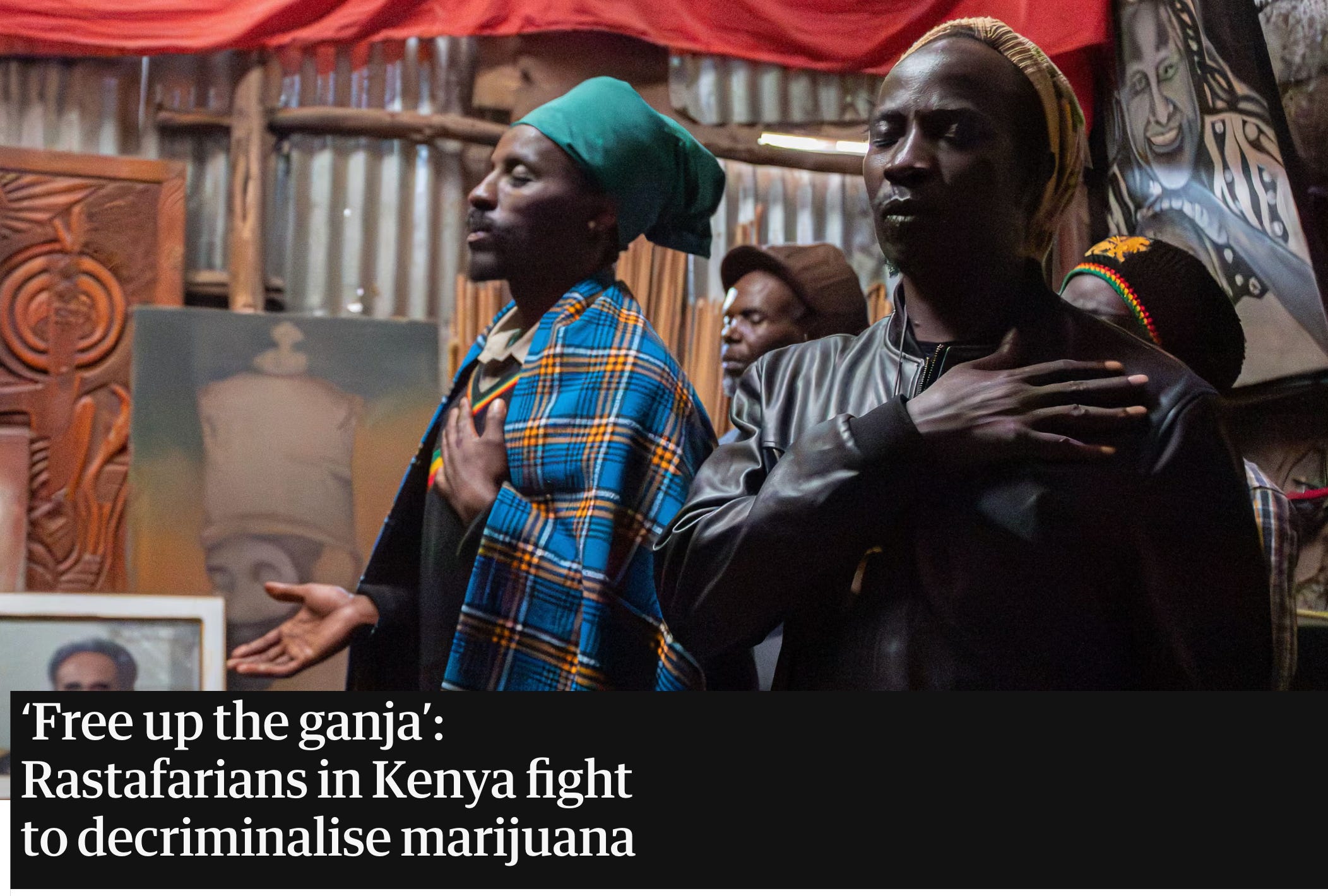
The Guardian: ‘Free up the ganja’: Rastafarians in Kenya fight to decriminalise marijuana
This feature written by Nairobi based journalist Carlos Mureithi, looks not only at the fight to decriminalise marijuana, but the history and culture around Rastafarian culture.
It’s a culture that is rarely, if at all, covered in the media, but the history behind it is incredibly interesting.
Rastafarians see Marijuana as a sacrament in their faith, and believe consuming it puts them in a meditative state that helps them connect more deeply with the divine, Mureithi explained.
“Free up the herb. Free up the ganja seed,” Ras Masinde, a follower, said.
I was left thinking about this piece hours after I read it, not only because of the topic, but because of the storytelling. It is truly a story that will suck you in and make you feel like you’re right in the room surrounded by music, singing, and culture.
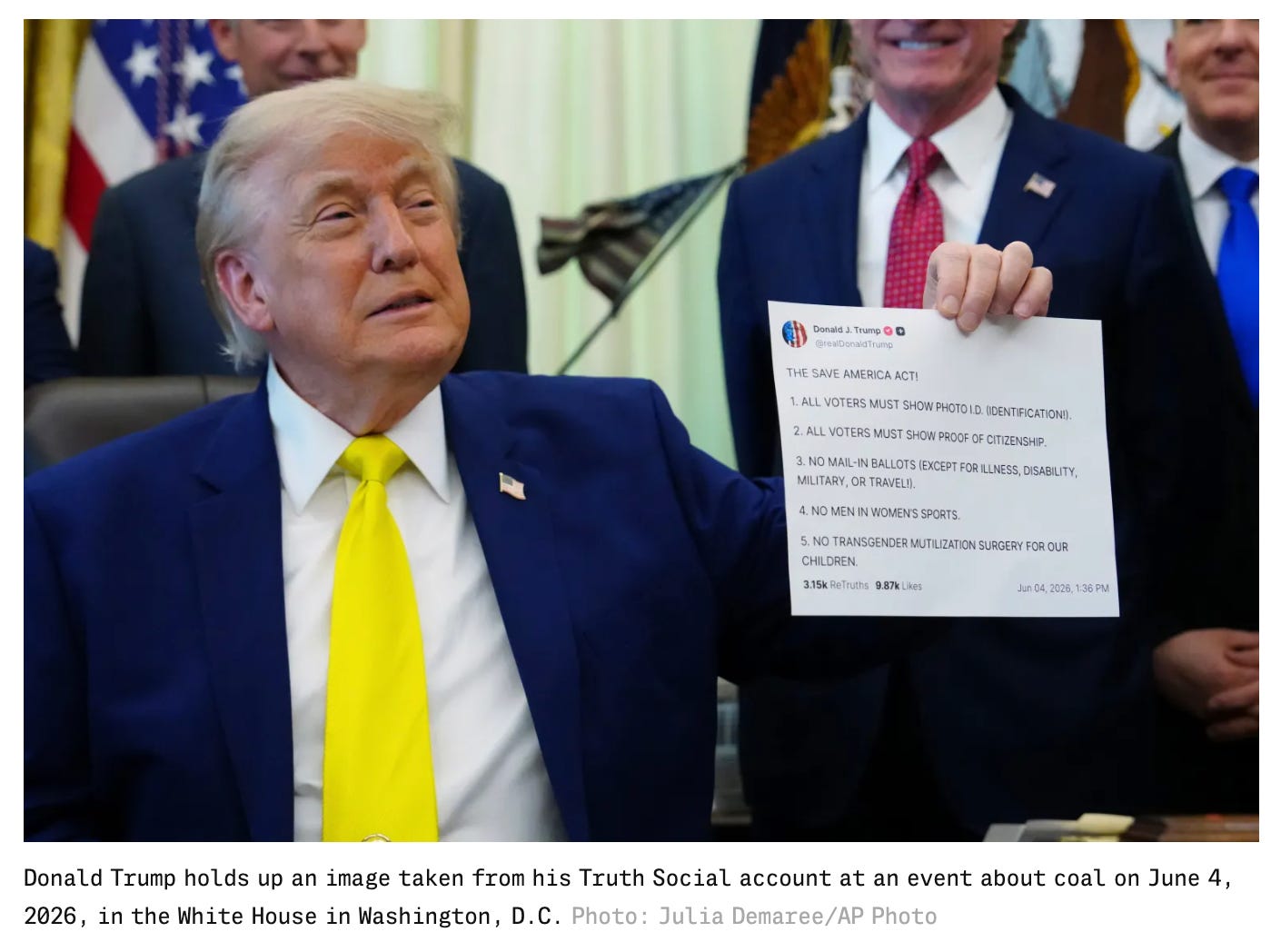
The Intercept: Trump’s Truth Social API is a blatantly corrupt favour to Wall Street
The fact that Truth Social, Trump’s social media platform, is selling $100,000 a month early-access to important posts has been all over the news recently.
However, this piece by Dylan Gyauch-Lewis at The Intercept is a brilliant explainer of what is going on, with a little bit of perspective as well.
“That’s an expedited lane to access statements and data from the president of the United States and other government officials, which have significant potential to move financial markets, ahead of us suckers in the general public,” she writes.
She explains how Truth Social has become a route for official announcements to be made by high-ranking government officials, rather than going through traditional press offices. Ultimately, “blurring the lines between his [Trump’s] communications as a public official and a private citizen”.
This was one of those pieces that shocks you, leaves you concerned, but also wondering how something like this was allowed to happen. And from someone who often finds financial and tech news hard to understand, this piece was wonderfully explained.
I would highly recommend you having a look at the full article.
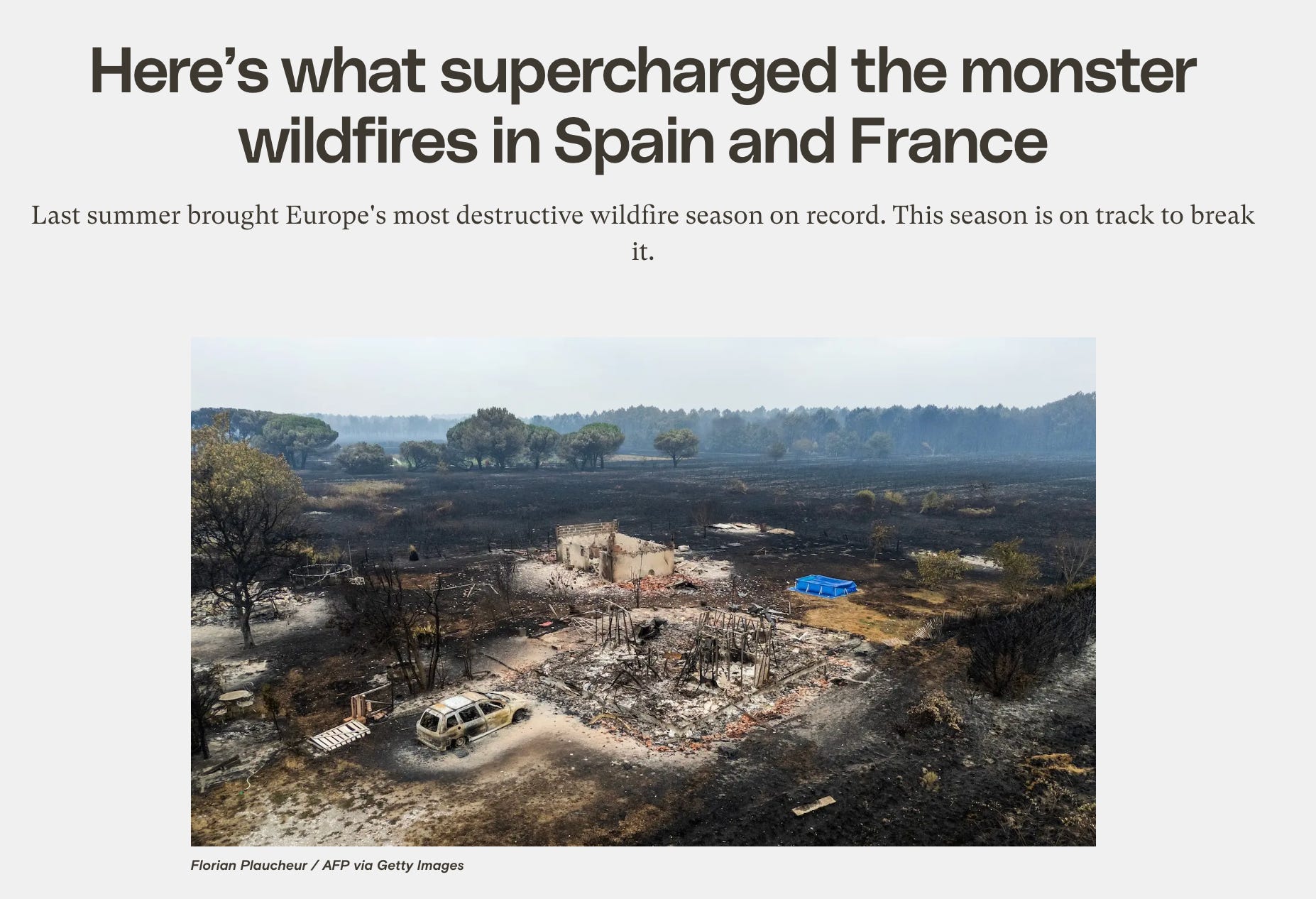
Grist: Here’s what supercharged the monster wildfires in Spain and France
Monster wildfires have hit Spain and France hard in what has been one of Europe’s most destructive wildfire seasons on record. It has led to the evacuation of people on the continent since World War II, which was a statistic that I was never aware of before.
This piece by Grist explains the actual science behind why these fires were “supercharged” and how they actually got so big.
Reporter Sachi Kitajima Mulkey explained that in months leading up to the wildfires, Western Europe had been scorched by back-to-back heat waves and extended drought. Ultimately dried out trees, shrubs, and farmland turned the area into a “tinderbox”.
She also found that a rainier than usual winter at the beginning of this year caused a burst of vegetation growth, which then dried up, and became fuel for these fires - or “weather whiplash”.
This piece continues to get into the nitty gritty around the aspects that made this fire as destructive as it was. For someone who often finds science and climate news hard to digest, this piece was incredibly easy to follow and understand.
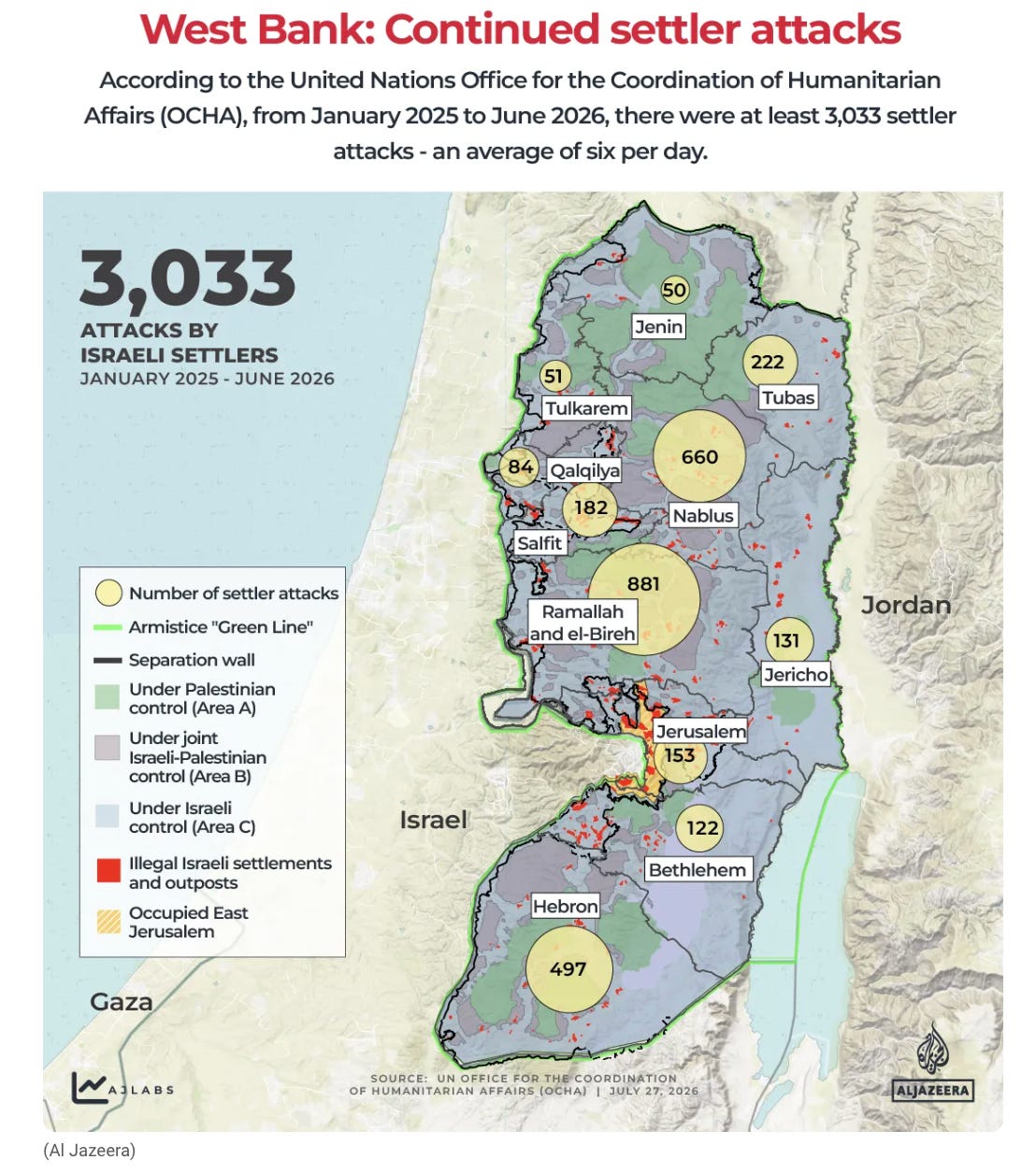
Al Jazeera: Mapping Israeli settler violence in the West Bank
There have been widespread escalations of Israeli settler attacks across the occupied West Bank, with mosques being set on fire, people killed, and homes destroyed.
This piece by Alia Chughtai and Marium Ali, looks at all the violence that has occurred, and breaks it down - including who Israeli settlers are, and the rough number of attacks per area.
The article states that according to the United Nations Office for the Coordination of Humanitarian Affairs, from January 2025 to January 2026 there were at least 3033 settler attacks - an average of six per day.
Chughtai and Ali break down 2026 settler attacks, and how they are happening more frequently than in 2025. They also cover Israeli settlement expansion, and how many Palestinians have been displaced due to settler attacks.
For those really wanting to understand what is going on, where, and why I’d check out the rest of this article.
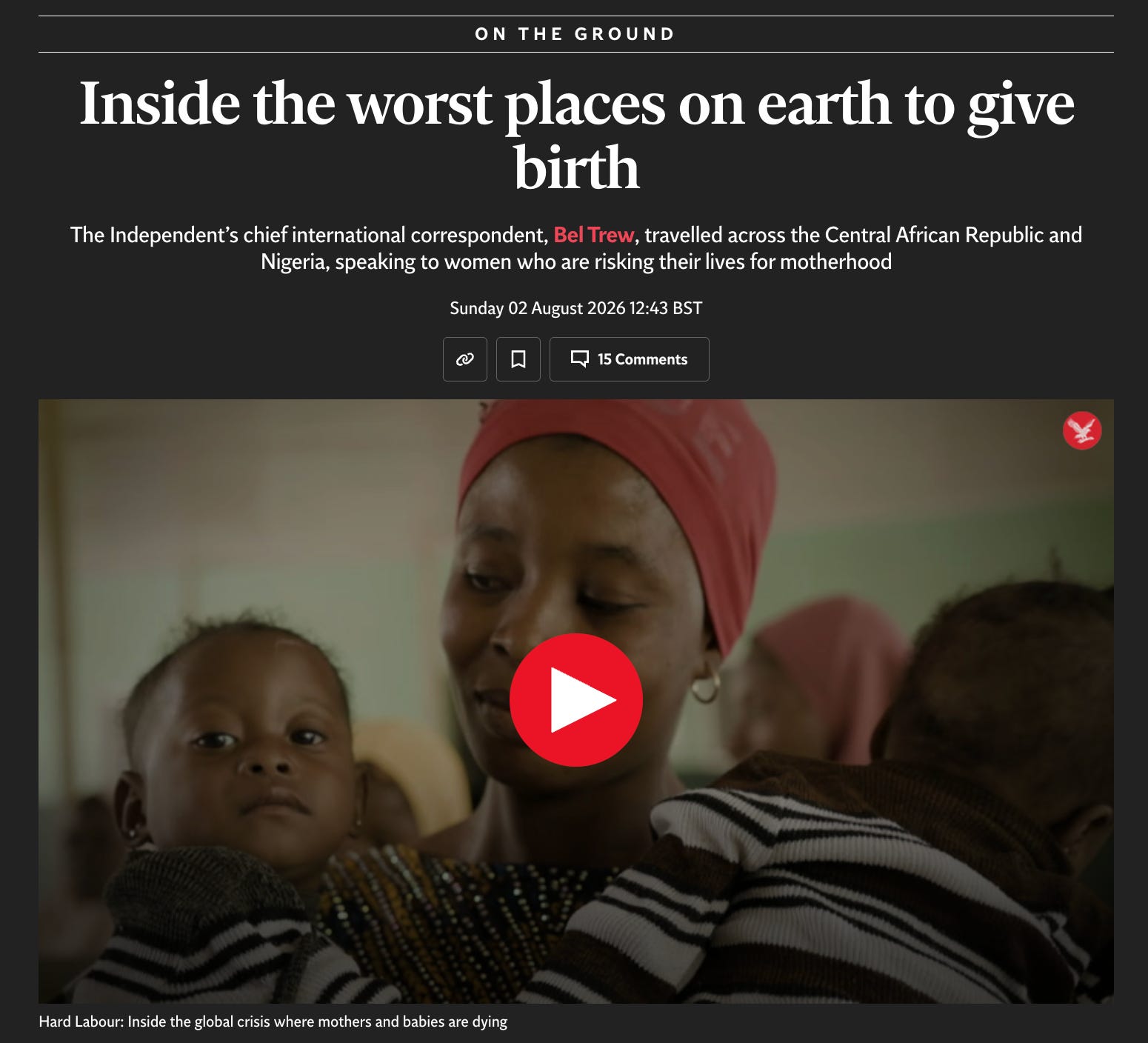
The Independent: Inside the worst places on earth to give birth
This piece published today is some of the best on-the-ground reporting I have seen in a long time.
Chief international correspondent Bel Trew, travelled across the Central African Republic and Nigeria, to speak with women who were risking their lives to give birth, and the findings are grave.
Trew not only speaks with women at risk, but also doctors in the area. She also looks at the cuts to funding and loss of access to services that have happened in recent times.
This article covers so many stories of women who have faced this issue first-hand. And even looks at the only dedicated paediatric hospital in the whole of the Centtal African Republic, which has some of the highest maternal and early infant mortality rates in the world.
This piece is also accompanied by a 20 minute documentary, so is definitely worth a read and a watch.
will share this with my journalism cohort tomorrow! thank you for collating these pieces!!!
I looove confusing news!!! Thank you for gathering these articles, I hope for more confusing news :)